Production - Divergent
Location
The Isle of Skye is beautiful. I’ve visited quite a few times, and I had a good idea of which locations I wanted to film. Despite this, the locations were unpredictable in terms of weather, tourists and terrain. I had to be efficient in my film shoots, as they had to happen between the frequent rain showers, constrained by limited light due to the shorter winter days.
Filming Outdoors
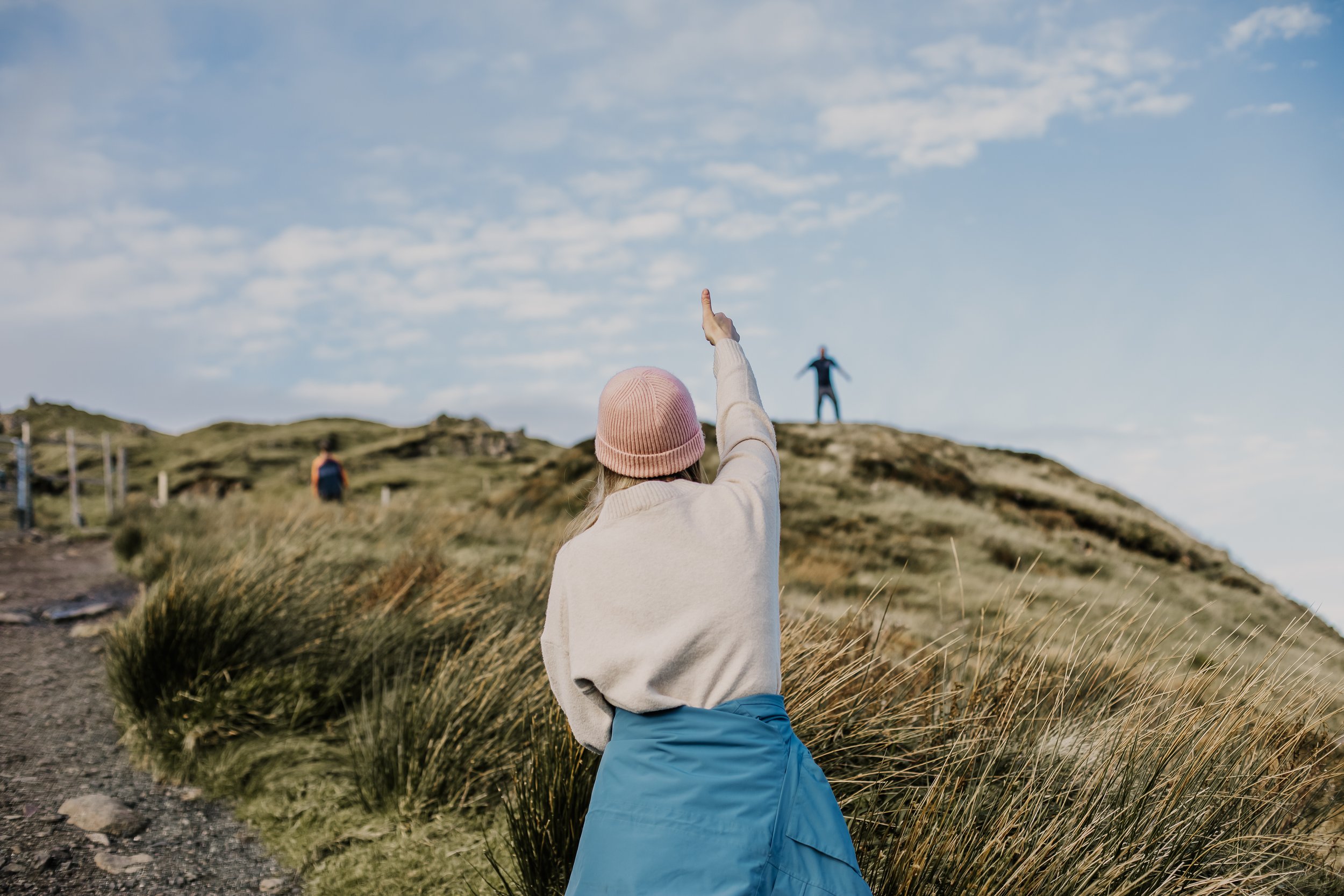
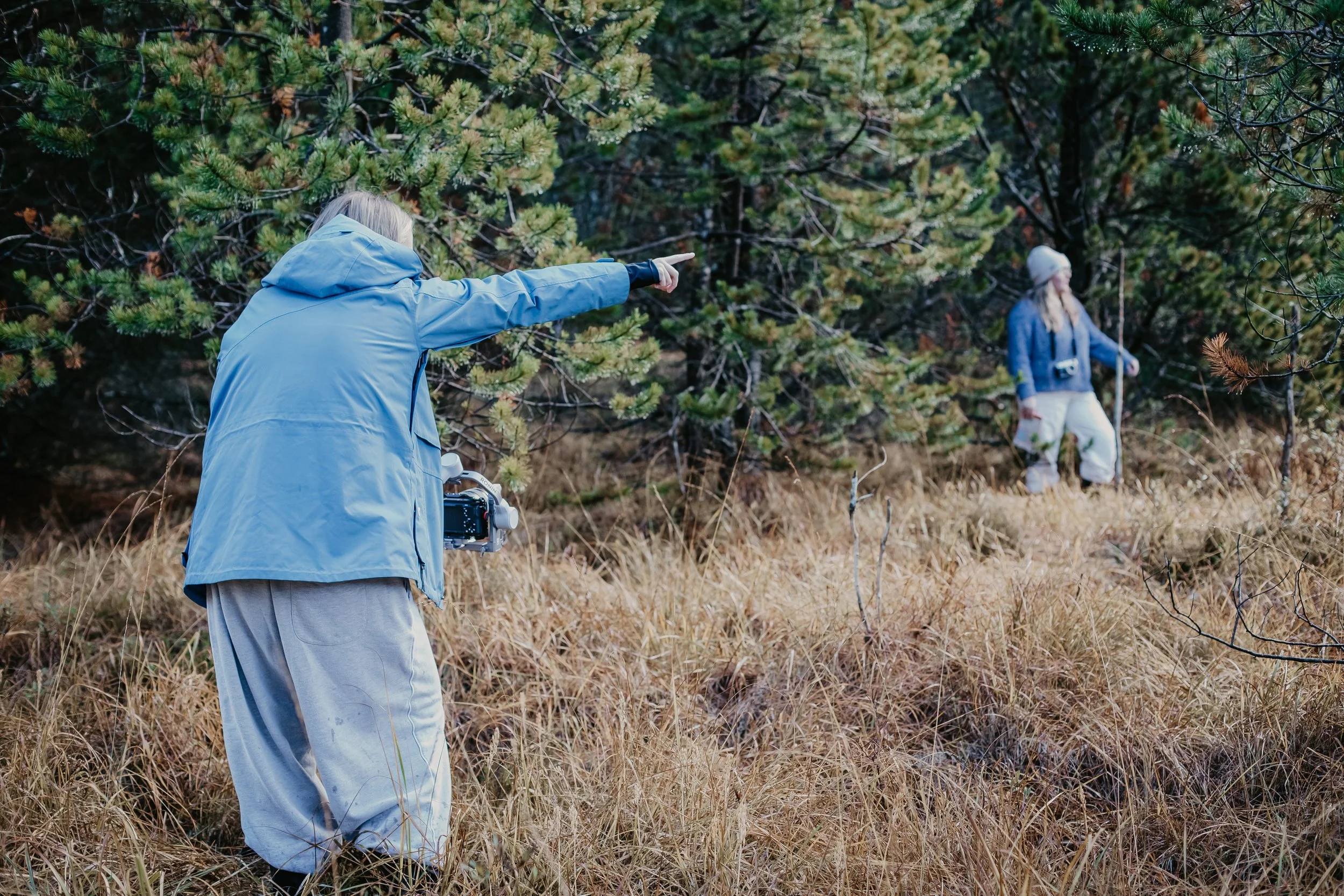
Directing my actor across distances during medium-wide and long shots was particularly tricky. I had to frame shots and shout directions across echoey and windy valleys or rushing streams where the actor and I could barely hear each other’s voices.
Equipment
This film was also shot with the Sony ZV-E1 with the 35mm lens. It would have been beneficial to have a 100-200 mm lens. This would have made the distant background mountains seem more prominent and epic in my shots.
The gimbal was critical, particularly when filming tracking shots on uneven terrain. Many of the forest and river shots were filmed using the gimbal.
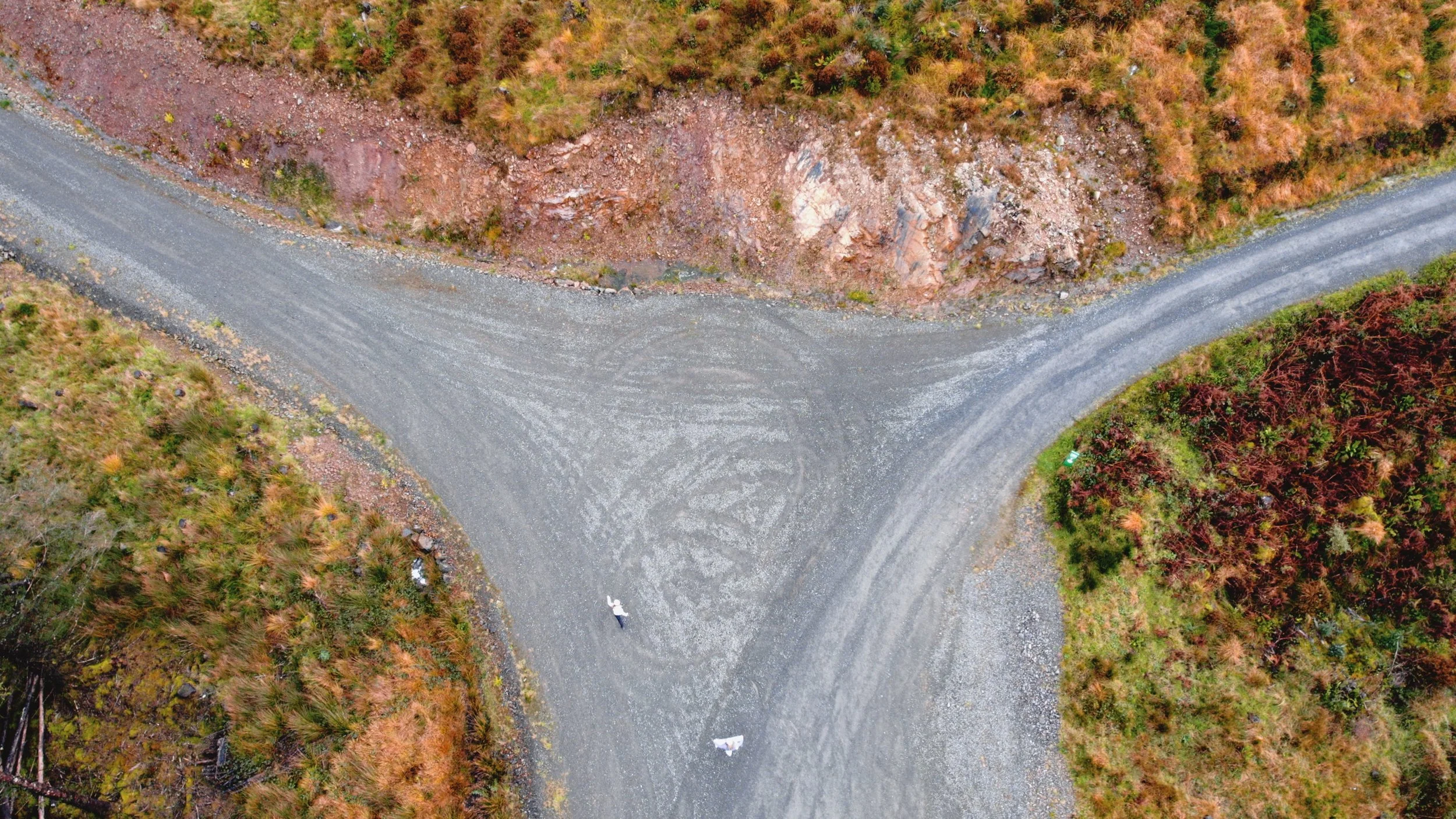
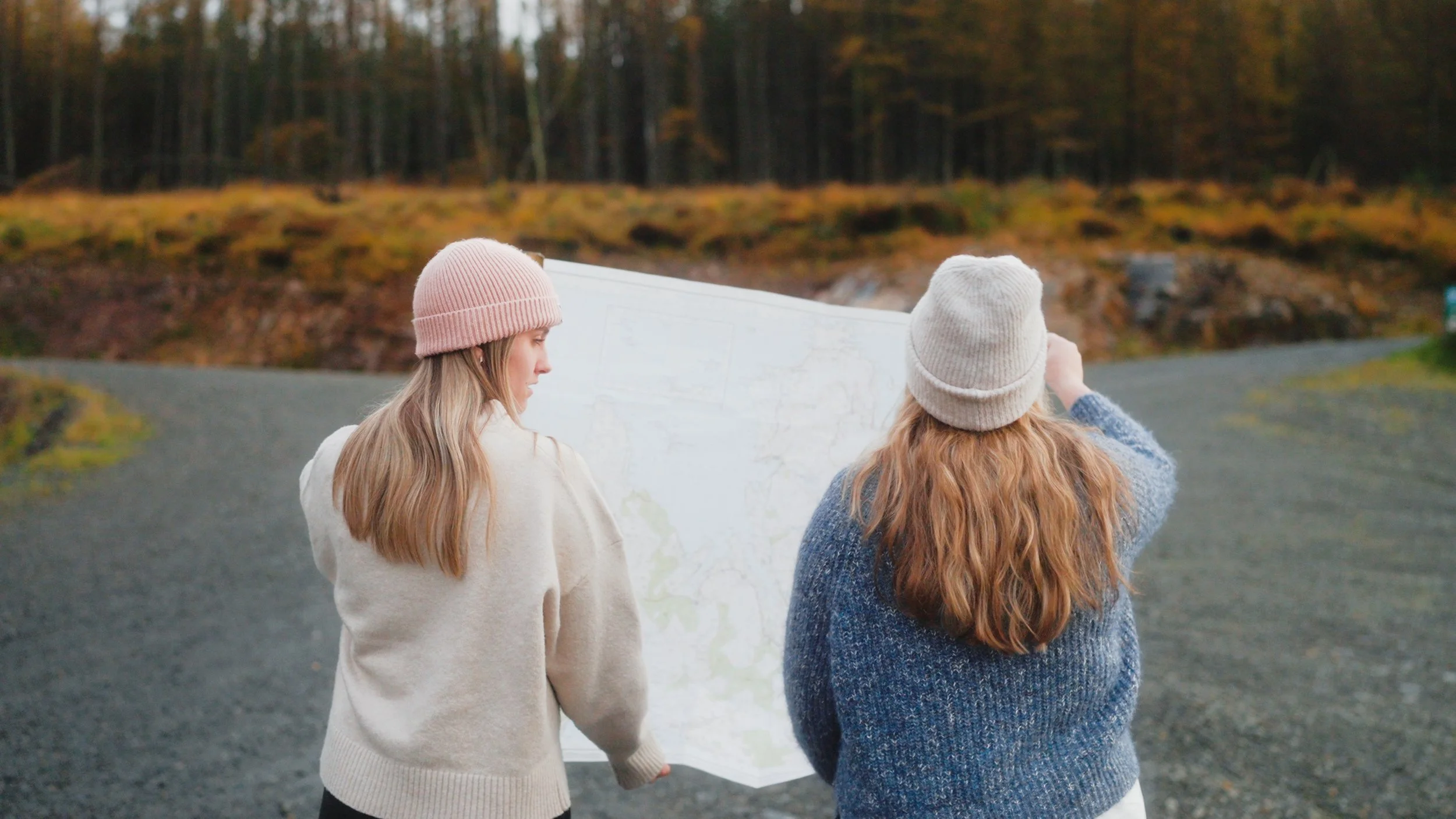
It was important to the story to capture the visual metaphor of the divergent paths. This was a metaphor for the two cognitive structures of neurodivergent and neurotypical thinking.
This proved impossible to do with the 35 mm lens at ground level. Fortunately, I had access to a drone and I was able to capture the shot I needed. The challenge was to fly the drone, compose my shot, and then take my position as an actor.
As my piloting skills improved, It was tempting to add many more drone shots to the film, but I did not feel that they would advance the story. While I have struggled with the constraints of a limit to the length of the film, this constraint has made me a more thoughtful editor.
Title Shot for Divergent
Lighting
Across the three days of filming, the vast majority of scenes were shot with natural light, other than the indoor shots during the final scene. To show the continuity of the journey, it was essential to maintain consistent exposure across the variable weather and available light while filming.
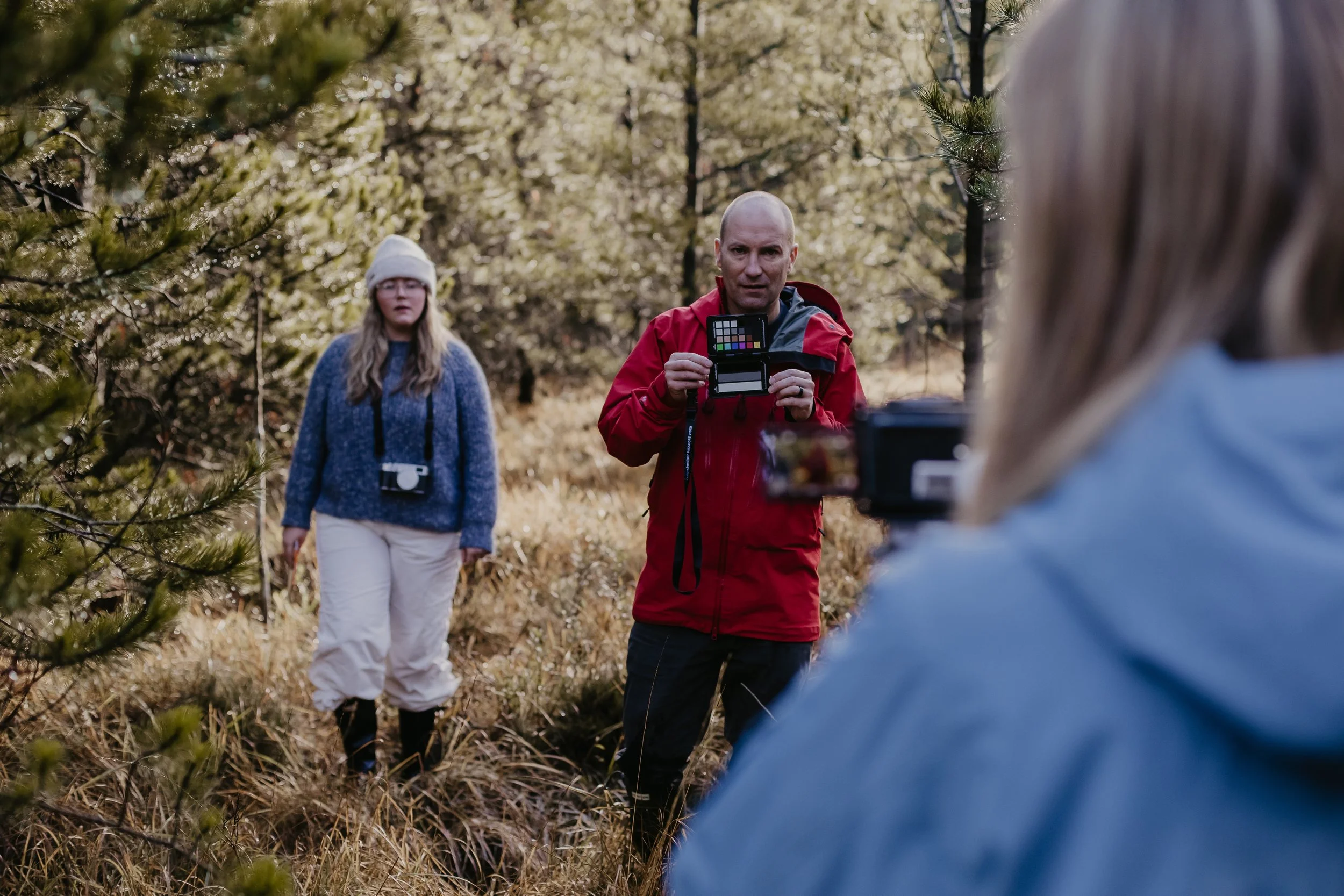
I used the Xrite colour passport every time I changed location or shot angle. This was hugely beneficial in creating a consistent look for the film.
Sound
I learnt lessons from filming “Coffee” and “The Gentlemen’s Brewing Collective.” I knew that a camera-mounted shotgun mic would not work in the outdoor space. I used lavalier mics with dead cats to capture the dialogue between the two actors. Based on my experience filming the Gentlemen’s Brewing Collective, I did my best to monitor the sound during production. This was difficult as I was balancing multiple roles during production.
Ambient sounds, such as the stream, were captured using an external recorder. Additional Foley sound was added from stock sound, such as the fire crackling or the door opening in the closing scene. I had an ambitious vision of what I wanted this film to look like, but I only had a limited crew. Whilst I was able to produce, film, sound record, direct, and act, it meant that I couldn’t have as much control over monitoring all elements of the film. This meant if one element was out of place, such as sound levels, I had to either re-record a scene or do my best to fix it in post. This ultimately made my production and post production processes more laborious.