Pre-Production - Divergent
The third film I created for my portfolio was Divergent. I was diagnosed with dyslexia around the age of 16 and remember struggling to feel adequate and shocked to learn something so new about myself. Once I was diagnosed, my parents listened to the book “Dyslexic Advantage” by Brock and Fernette Eide and began to share with me how my dyslexia, in many ways, grants me a richer perspective and experience of life. From these conversations stemmed my mother’s metaphor of dyslexia being the “scenic route.” This then inspired me to create Divergent as a way to visualise this metaphor in order to illustrate the beauty and power found within my neurodiversity.
For the visuals of Divergent, I wanted to highlight the advantages of neurodiverse thinking through the perspective of the main protagonist, the girl in the blue jumper.
My aim is to show how neurodiverse thinking is often characterised by a rich experience of sensory interaction with the surrounding environment. This heightened sensory experience is sometimes framed as a distraction, but I wanted to show that, although it follows a less conventional path of reasoning, the “scenic route” often leads to a fuller and more enriched experience of the world. I want to show how that although it may take longer to reach a particular destination or goal, success is not only achievable but is often more rewarding.
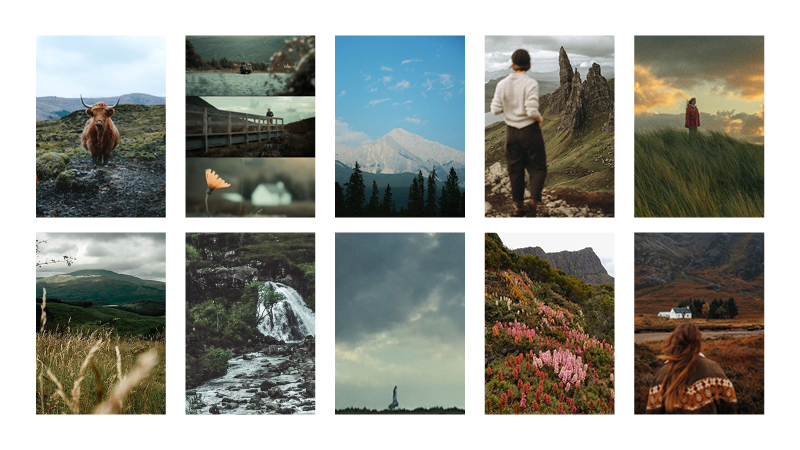
Mood Board - Divergent
To show neurodiverse people’s heightened sensitivity to their surrounding enviornment, I decided that everytime a new location was introduced, with the neurodiverse character present, I would introduce the new location through closeups rather than an establishing shot. Once the textures of the environment were introduced, I would then create wider shots, showcasing the process of how neurodiverse people build an understanding of thier surroundings. A pattern often found within neurodiversity is the tendency to be detail-oriented, which allows them to build a greater understanding of the world around them.
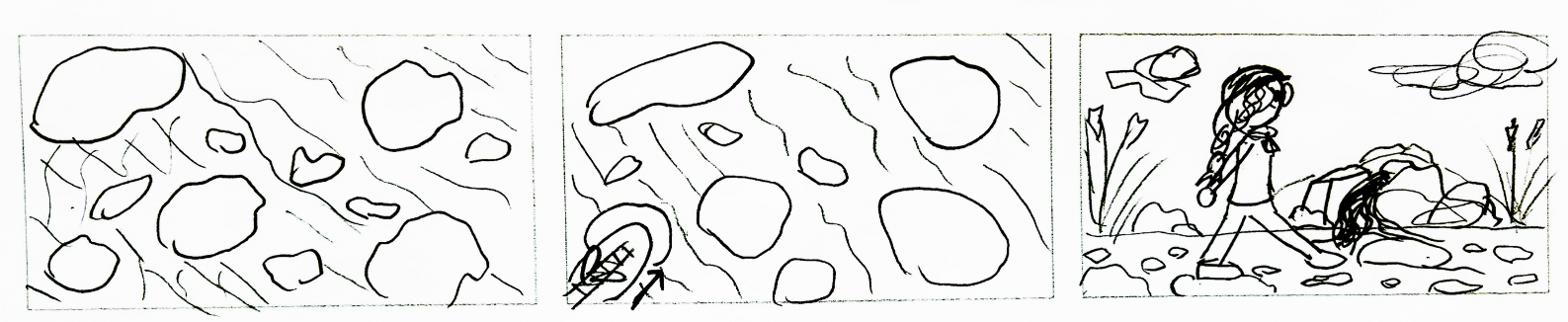
Story board showing the sequence from the detail shots to the wide shots.
Whilst a neurodiverse cognitive process can be longer than a neurotypical one, by having a more detail orientated process, it is suggested that this can benefit aspects such as memory, throuoghness, problem-solving and creativity. I hope that the way I structure these shots is to celebrate these advantages.
I additionally want to celebrate the beautiful lanscapes of Skye whilst still conveying a sense of movement. I want to have mostly still shots to convey a sense of comfort that the protagonist finds within the stillness of nature.

Storyboarding was critical for this film. I had learnt from my film Coffee that detailed storyboard and shot lists can greatly improve productivity in production. Out of the three films I made for my portfolio, Divergent was the easiest film to edit due to the close relationship between my pre-production, production and post production.
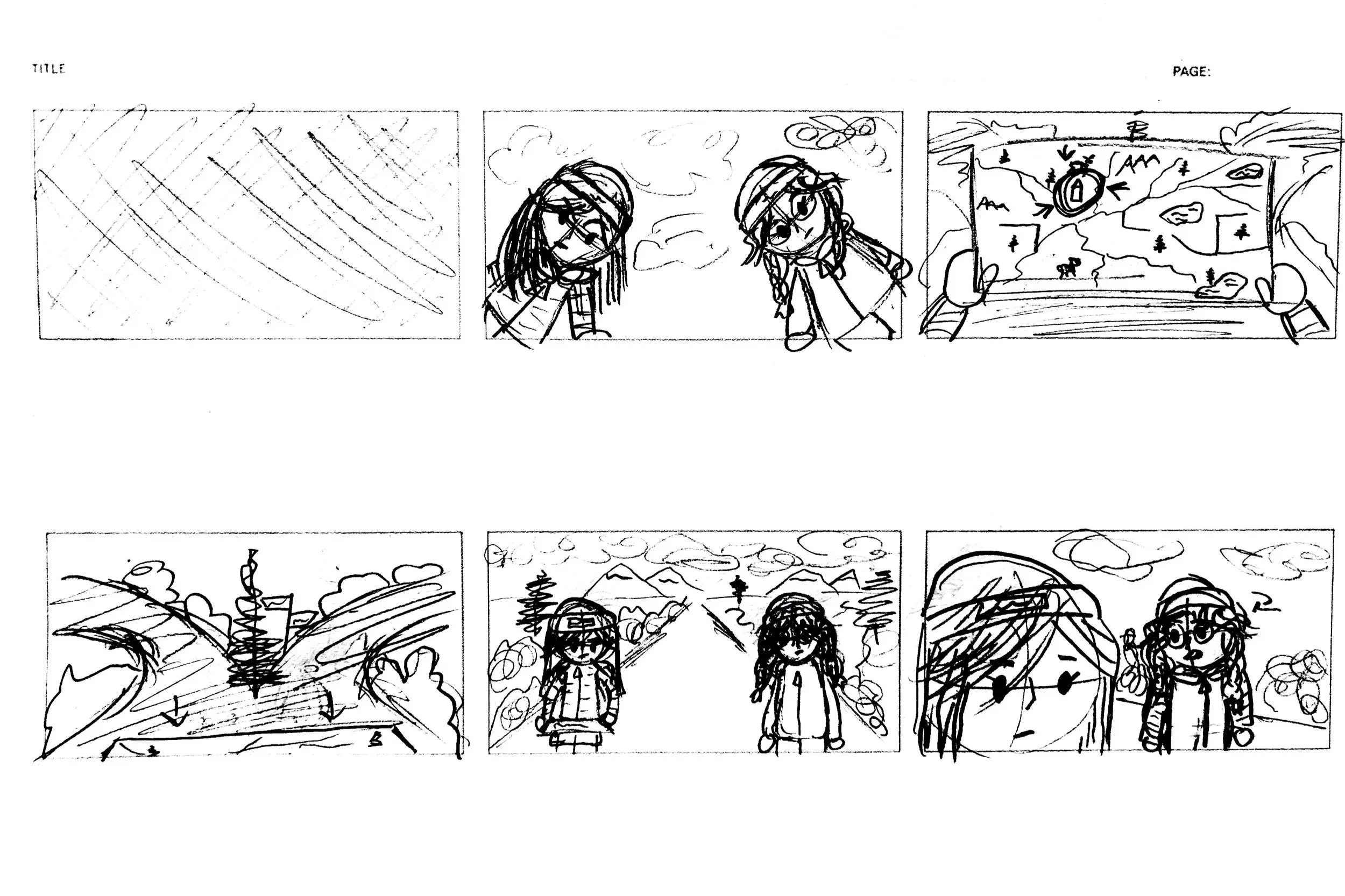
I have chosen not to have many tracking shots within this film. This is because too many tracking shots may cause a viewer to hyperfocus on the protagonist rather than the journey itself. Both aspects of this film need to complement each other; one cannot shine without the other. Therefore, the only time I would use tracking shots is when both the enviornment and the protagonist are visually immerse the viewer within the journey. For instance, I liked the idea of a tracking shot following the protagonist’s hand as it moves across the beam of an old wooden bridge.